Decades after the dangers of asbestos became widely known, thousands of New York teachers and students are still walking into buildings where this toxic mineral may be hiding in walls, ceilings, floors, and pipes. The concern isn’t hypothetical; it’s backed by audits, federal regulations, and decades of incomplete inspections that have left many school communities vulnerable.
At The Williams Law Firm, P.C., we fight for people who have been diagnosed with mesothelioma or other asbestos-related illnesses after years of unknowing exposure. Lead attorney and founding partner Joseph P. Williams has spent 30 years representing victims across New York and beyond, and we understand that this type of exposure often begins long before anyone realizes there was ever a problem.
Before federal regulations began limiting asbestos use in construction, the mineral was considered an ideal building material. It was inexpensive, fire-resistant, and highly durable, which made it a standard component in insulation, floor tiles, ceiling panels, pipe coverings, joint compound, and roofing materials. Virtually every school built during the mid-twentieth century used asbestos in some capacity.
The federal government’s recognition of asbestos as a serious carcinogen led to increased regulation through the 1970s, and its use in new construction declined sharply. Congress enacted the Asbestos Hazard Emergency Response Act (AHERA) in 1986 specifically to address the ongoing risk in school buildings. AHERA requires schools to conduct inspections every three years and surveillance checks every six months to monitor the condition of any asbestos-containing materials (ACM). A 2025 audit by the New York City Comptroller’s Office found that the Department of Education failed to complete 82% of required triennial inspections between 2021 and 2024, and only 22% of required six-month checks were conducted during that same period.
The significance of this goes beyond a compliance issue. Asbestos that remains undisturbed poses a limited immediate threat, but aging, damaged, or disturbed materials during routine maintenance or renovation can release microscopic fibers into the air. Once airborne, those fibers can be inhaled and become permanently lodged in lung tissue. The human body cannot expel them, and over time, they cause inflammation, scarring, and, in many cases, mesothelioma.
Teachers and staff face a disproportionate level of risk compared to students because of the sheer amount of time they spend inside these buildings. A teacher may spend 30 or 40 years in the same classrooms, hallways, and common areas where asbestos is present. School custodians face an even more concentrated risk, particularly those who work in boiler rooms and maintenance areas where pipe insulation and heating equipment containing asbestos are commonly found.
One of the most difficult aspects of asbestos-related disease is that symptoms may not appear for 20 to 50 years after initial exposure. A teacher who worked in a New York school during the 1970s or 1980s may be receiving a mesothelioma diagnosis today with no obvious connection to their time in the classroom. This latency period is why it is critical to thoroughly document an occupational history when building a mesothelioma case.
Understanding where and how exposure occurred is crucial to pursuing compensation. That documentation often includes employment records, building histories, and evidence of the specific asbestos-containing products present at a given location during the years someone worked there.
Symptoms of mesothelioma and asbestos-related lung conditions often develop gradually and may initially be mistaken for other respiratory issues. Common early warning signs include persistent chest pain, shortness of breath, a dry or chronic cough, and unexplained weight loss or fatigue. By the time these symptoms prompt a thorough medical evaluation, the disease may already be in an advanced stage, which is why early consultation with both a physician and a legal professional is so important.
Asbestos in school buildings can be found in a range of materials that were standard in construction before 1980. These include the following:
Any work that disturbs these materials, from drilling to patching to replacing fixtures, can release fibers without proper testing and containment procedures in place.
A mesothelioma or asbestos-related diagnosis does not mean you have to face the financial and legal consequences alone. New York law provides meaningful avenues for compensation for those who were exposed to asbestos through their workplace or environment, including schools and other institutions. Companies that manufactured asbestos-containing products knew of the risks long before the public did, and many have been held accountable through litigation and asbestos trust funds.
New York has statutes of limitations that affect when a mesothelioma claim may be filed. Acting promptly after a diagnosis gives your legal team the time needed to gather the necessary evidence, identify liable parties, and build the strongest possible case on your behalf. Waiting can limit your options.
At The Williams Law Firm, P.C., we treat every case as our personal cause. Attorney Joseph P. Williams has represented over 1,000 families affected by mesothelioma and asbestos-related illness, recovering hundreds of millions of dollars on their behalf. He has never lost a mesothelioma case, and he will personally meet with you in your home to begin working on yours. Our firm brings 30 years of experience, a Super Lawyers inclusion record, and recognition from the National Trial Lawyers Top 100 to every case we take.
If you or someone you love has been diagnosed with mesothelioma or another asbestos-related illness, we are ready to fight for you. Schedule a free consultation with The Williams Law Firm, P.C. today.
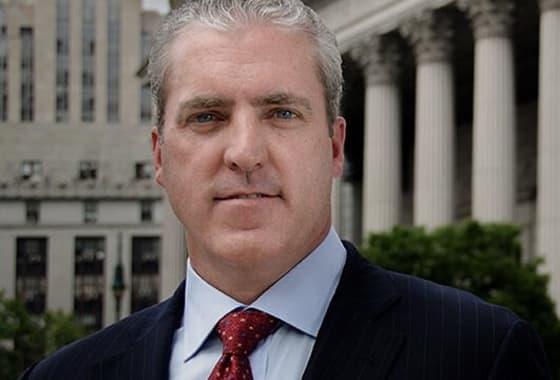
As the founding partner of Williams Law Firm, Joseph P. Williams has dedicated over 30 years to representing mesothelioma victims and their families. His firm has recovered hundreds of millions of dollars for those affected by asbestos exposure, offering personalized, aggressive legal advocacy. Based in New York, Williams Law Firm provides free consultations and handles cases nationwide.

