Few American workers carried a heavier toxic burden than those who kept the nation’s industrial engines running. For boilermakers working through the 1960s and 1970s, every shift spent in a boiler room, on a factory floor, or aboard a naval vessel meant breathing air thick with asbestos fibers, often without any warning that the dust settling on their clothes and lungs would silently damage their health for decades to come.
If you worked as a boilermaker during this era and have since been diagnosed with mesothelioma or another asbestos-related illness, you may have a legal case. At The Williams Law Firm, P.C., lead attorney and founding partner Joseph P. Williams has never lost a mesothelioma case and has spent 30 years fighting for workers like you. We are here to help you understand your rights and pursue the compensation your family deserves.
Boilermakers were among the hardest-hit occupational groups of the mid-20th century. According to the Agency for Toxic Substances and Disease Registry (ATSDR), heavy asbestos exposures across American industry peaked during the 1960s and 1970s, with an estimated 27 million U.S. workers exposed to airborne asbestos fibers between 1940 and 1979. Boilermakers occupied a uniquely dangerous place within that statistic.
The nature of the work made near-constant contact with asbestos almost unavoidable. Boilers are high-pressure vessels that generate enormous heat, and manufacturers of that era relied almost exclusively on asbestos to manage that heat. As a result, virtually every material a boilermaker came into contact with on the job, including insulation wrap, gaskets, rope packing, refractory cement, and pipe covering, was loaded with the mineral.
The settings where boilermakers worked were as varied as they were dangerous, and asbestos was present across all of them.
Assembly lines that produced boilers in the mid-20th century used asbestos at nearly every stage of the process. Workers who fabricated, welded, or finished boiler components were routinely exposed to asbestos that had been spray-applied, towel-applied, or factory-installed directly into the equipment. These facilities were often poorly ventilated, which concentrated airborne fibers and left workers breathing dangerous levels of asbestos dust throughout their shifts.
Boilermakers employed at power plants, refineries, and large industrial facilities were continuously exposed to boilers and the surrounding infrastructure. Walls, ceilings, floors, and pipe systems in boiler rooms were all frequently insulated with asbestos-containing materials. The Occupational Safety and Health Administration (OSHA) estimates that approximately 180,000 workers still face asbestos exposure during boiler repairs each year, a figure that reflects just how widely the mineral was embedded in this industry.
Boilermakers who served in the U.S. Navy or worked in shipyards faced some of the most severe asbestos exposure of any workers in the country. Ship engine rooms and boiler rooms were small, poorly ventilated spaces packed with asbestos-insulated pipes, boilers, and hull materials. Because Attorney Williams handles veterans’ mesothelioma cases with the same tenacity he brings to every case, he understands the full scope of what naval service meant for workers exposed in these confined environments. Attorney Williams uses actual naval archive records, including a complete list of equipment from the ships, creating a compelling, detailed record of asbestos exposure that is difficult for defendants to challenge.
Understanding exactly how exposure occurred is critical to building a mesothelioma case, and Attorney Williams thoroughly investigates it for every client. During the 1960s and 1970s, routine boilermaker tasks disturbed asbestos, releasing fibers into the air. These activities included cutting and fitting pre-molded pipe insulation, replacing worn gaskets and rope packing, hammering or grinding boiler components, removing and reapplying refractory materials, and attaching equipment to pipes or beams covered in asbestos fireproofing.
Because asbestos fibers are microscopic and invisible to the naked eye, workers had no way of knowing they were inhaling them. Worse, at the time, asbestos was often marketed as a form of personal protective equipment, a cruel irony for a generation of workers who trusted their employers to keep them safe. Workers who want to understand what qualifies as asbestos exposure under the law may also want to review information about asbestos job sites in New York and occupations with asbestos exposure risk to see how their own work history may apply.
One of the most devastating aspects of asbestos-related disease is that it does not announce itself quickly. Mesothelioma and asbestosis typically take between 20 and 50 years to develop after initial exposure, which is why so many boilermakers who worked in the 1960s and 1970s are receiving diagnoses today, well into their retirement years. By the time symptoms appear, including chest pain, shortness of breath, and persistent cough, the disease is often advanced.
This long latency period also creates legal challenges. Records from decades ago can be difficult to locate, employers may no longer exist, and memories of specific job sites and products fade over time. Attorney Williams has the experience and resources to track down the documentation needed to build a strong case, including records needed for a mesothelioma claim that many clients do not know how to gather on their own. He has handled cases involving Boilermakers Local 5, one of the many New York unions whose members he has proudly represented throughout his career.
A mesothelioma diagnosis is the most serious case a person could ever have, and The Williams Law Firm, P.C. treats it that way. Attorney Joseph P. Williams will personally meet with you in your home to begin working on your case, providing the kind of individual attention that larger firms simply do not offer. With 30 years of experience, an undefeated record in mesothelioma cases, and a reputation built on knowledge, dedication, and aggressive advocacy, we are prepared to fight for you every step of the way.
If you worked as a boilermaker and have been diagnosed with mesothelioma or an asbestos-related illness, do not wait. Time limits apply to these claims, and early legal action can make a critical difference in the outcome. To get started, schedule a free consultation with The Williams Law Firm, P.C. today.
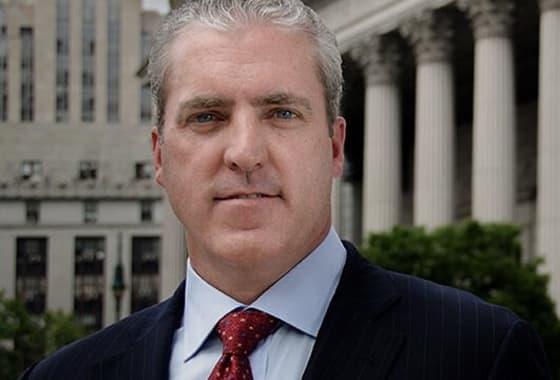
As the founding partner of Williams Law Firm, Joseph P. Williams has dedicated over 30 years to representing mesothelioma victims and their families. His firm has recovered hundreds of millions of dollars for those affected by asbestos exposure, offering personalized, aggressive legal advocacy. Based in New York, Williams Law Firm provides free consultations and handles cases nationwide.
