The naturally occurring group of fibrous minerals known as asbestos have been used in the United States since the late 1800s. But the carcinogenic risks associated with asbestos were widely unknown to the general public until the 1960s and ’70s.

In the 1980s, OSHA adopted rules to limit workers’ asbestos exposure risks.
The use of asbestos was regulated somewhat by 1970’s Clean Air Act and 1976’s Toxic Substances Control Act, but it wasn’t until 1989 that the Environmental Protection Agency (EPA) finally issued its asbestos ban and phase-out rule, which intended to eventually ban the manufacture, import, sale or processing of asbestos. Yet asbestos remained in use in manufacturing, shipyards, building construction and other occupations.
In the late 1980s, however, the Occupational Safety and Health Administration (OSHA) created regulations to control the use of asbestos and limit exposure to workers. Unfortunately, industries in which asbestos was prevalent also happened to be large employers, meaning millions of laborers were exposed to asbestos and its associated health risks, including mesothelioma.

Workers in protective gear remove asbestos-containing panels.
For workers in “general industry,” construction or shipyard employment, the risk of asbestos exposure was high. Because of this, OSHA instituted a number of guidelines from the late 1980s through the early 1990s, including:

In addition to federal rules, many states have their own regulations about worker safety and asbestos exposure.
In addition to OSHA’s guidelines, the EPA protects state and local employees who work in states without an OSHA-approved occupational safety and health plan. This is part of the Toxic Substances Control Act and regulates how employers in non-OSHA states should operate in asbestos exposure conditions.
States like New Jersey and New York, which have high laborer populations, also created their own regulations for asbestos exposure. Public Employees Occupational Safety and Health of New Jersey outlines specific asbestos limits and working conditions for New Jersey workers, as does the New York State Department of Health for laborers in the Big Apple.
While these guidelines and regulations help protect those working in construction, shipyards or other occupations at risk for asbestos exposure, they came too late for many.
Millions of American workers were exposed to asbestos without knowledge of its risks and have since developed mesothelioma or other types of cancer.
New York attorney Joseph P. Williams and the team at The Williams Law Firm are committed to helping asbestos exposure victims and their families get the compensation they need to cope with medical expenses and other damages. We offer free consultations to help you understand your legal options, and we don’t charge for our services until we recover on your behalf.
Please call us today at 855-575-MESO (6376) or contact us online. The Williams Law Firm is located in New York, but we work with clients nationwide.
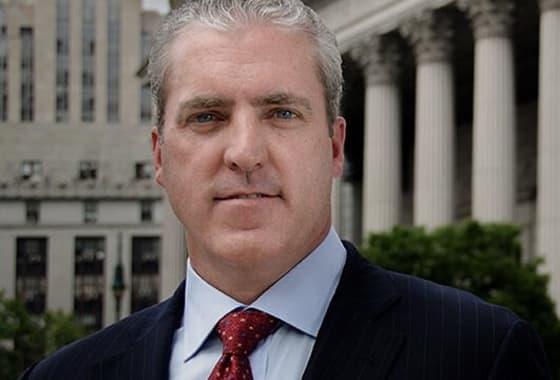
As the founding partner of Williams Law Firm, Joseph P. Williams has dedicated over 30 years to representing mesothelioma victims and their families. His firm has recovered hundreds of millions of dollars for those affected by asbestos exposure, offering personalized, aggressive legal advocacy. Based in New York, Williams Law Firm provides free consultations and handles cases nationwide.
