When a family member is diagnosed with mesothelioma — or passes away from it — the grief and financial pressure that follow can feel impossible to manage at once. What many families don’t realize is that the law provides a path to financial compensation that can help cover medical bills, lost income, funeral costs, and the profound losses that come with this disease. You do not have to be the mesothelioma patient yourself to pursue a claim.
At The Williams Law Firm, P.C., founding attorney Joseph P. Williams has spent over 30 years representing mesothelioma victims and their families — and has never lost a mesothelioma case. If someone in your family has been diagnosed with or died from mesothelioma, our team can help you understand your legal options and pursue every dollar your family deserves. Reach out through our contact form for a free consultation. You pay nothing unless we win.
State laws recognize that mesothelioma harms entire families, and multiple categories of relatives may be eligible to file claims. Those who may qualify include:
Family members who were exposed to asbestos secondarily — spouses who laundered a worker’s contaminated clothing, or children who had regular contact with an exposed parent — may also have their own independent second-hand asbestos exposure claims, entirely separate from a wrongful death case.
Families affected by mesothelioma typically have access to three main compensation pathways, and in most cases multiple paths can be pursued simultaneously.
A wrongful death lawsuit is a civil claim brought by surviving family members or the estate representative against the manufacturers and distributors of asbestos-containing products responsible for the exposure. It seeks financial compensation for both economic losses — funeral costs, medical bills, and lost income — and noneconomic losses such as loss of companionship and emotional distress. Wrongful death settlements in mesothelioma cases average between $1 million and $1.4 million, though results vary significantly based on the specifics of the case. Some families have recovered substantially more, including multi-million-dollar verdicts when the evidence of corporate negligence is particularly strong.
If your family member had already filed a personal injury lawsuit but passed away before it concluded, that lawsuit does not disappear. Your family can continue the action and convert it into a wrongful death claim. This approach carries forward the original evidence and filings, typically reducing the time and cost involved compared to starting from scratch.
Many of the companies responsible for manufacturing and distributing asbestos-containing products have since declared bankruptcy. Before closing, these companies were required by courts to establish dedicated trust funds to compensate future victims. Today, more than 60 active asbestos trust funds hold billions of dollars available specifically for mesothelioma victims and their families.
Trust fund claims typically resolve faster than lawsuits — often within 90 days — and do not require going to court. Average trust fund payouts range from $300,000 to $400,000 per trust, and families can file against multiple trusts simultaneously if their loved one was exposed to products from multiple manufacturers. Trust fund claims and civil lawsuits are not mutually exclusive and can be pursued in parallel to maximize total recovery.
If the family member who was diagnosed with or died from mesothelioma was a U.S. military veteran, your family may be eligible for additional monthly compensation through the Department of Veterans Affairs. Asbestos was used extensively in Navy ships, shipyards, and military installations throughout the 20th century, making veterans one of the most heavily affected populations.
Key VA benefits available to surviving family members include Dependency and Indemnity Compensation (DIC) — a monthly, tax-free payment currently set at $1,653.07 per month for qualifying surviving spouses — and the Survivors Pension, which provides income support for low-income surviving spouses and dependent children of wartime veterans. Aid and Attendance payments provide additional monthly support for surviving spouses who are bedridden or require help with daily activities. VA burial benefits cover funeral and burial expenses for veterans who die from service-connected conditions. VA benefits and civil lawsuits are not mutually exclusive — families can and often should pursue both simultaneously.
The specific damages recoverable in a mesothelioma family claim depend on the type of action, the state’s laws, and the facts of the case. Typical categories of compensable losses include funeral and burial costs, outstanding medical bills from diagnosis and treatment, lost earnings and future income the deceased would have provided to the family, lost household services, loss of consortium and companionship, mental anguish and emotional distress, and pain and suffering experienced by the deceased prior to death. In rare cases involving particularly egregious corporate conduct, punitive damages may also be available.
Many spouses and children of asbestos workers have developed mesothelioma, asbestosis, and asbestos-related lung cancer from secondary exposure — caused by fibers carried home on work clothing, hair, and skin. These family members were never on the job site, yet they inhaled asbestos fibers during routine contact with exposed workers at home.
Secondary exposure claims are fully recognized under New York and New Jersey law. A family member who develops an asbestos-related disease from secondary contact is entitled to file their own personal injury claim against the manufacturers of the products that exposed their relative — independent of any claim the worker himself may have filed. These claims can result in significant compensation and are evaluated on the same legal standard as direct occupational exposure claims. Learn more about mesothelioma and your family.
Statutes of limitations impose hard legal deadlines on family claims, and missing them permanently forecloses the right to compensation. These deadlines vary by state and by the type of claim:
In New York, surviving family members have two years from the date of death to file a wrongful death claim. For secondary exposure personal injury claims, the deadline is three years from the date of diagnosis. In New Jersey, both wrongful death and personal injury claims must generally be filed within two years. In Texas, the wrongful death deadline is two years from the date of death. In California, the wrongful death statute is generally two years from the date of death or discovery of the cause of death.
Because mesothelioma is often diagnosed rapidly and patients sometimes pass away within months, these deadlines can arrive faster than families expect. In New York, trust fund claims are not bound by the same statutes of limitations as civil lawsuits, but filing promptly preserves the strongest possible record of evidence. Contacting an attorney as early as possible after a diagnosis or death is the most important step to protecting your family’s rights.
Pursuing mesothelioma compensation as a family member does not require prior knowledge of asbestos law or any understanding of the legal system. An experienced mesothelioma attorney handles every step of the process on your behalf. The process typically begins with a free consultation to evaluate your family member’s exposure history and identify potentially liable defendants. The attorney then gathers documentation — employment records, medical records, union records, military service records, and product identification — to build the evidentiary foundation of the claim.
Claims are then filed against the appropriate defendants, including civil lawsuits against solvent manufacturers and trust fund claims against bankrupt companies. The attorney negotiates settlements with each defendant and, if settlement is not reached, prepares the case for trial. Most mesothelioma cases resolve through settlement rather than trial. Trust fund claims often produce initial payments within 90 days of filing. Civil lawsuit settlements typically take six months to two years depending on case complexity and court scheduling.
Attorney Joseph P. Williams has never lost a mesothelioma case and has recovered hundreds of millions of dollars for mesothelioma victims and their families across New York, New Jersey, Texas, and beyond. He handles all cases on a contingency fee basis — no upfront costs, no attorney fees unless compensation is recovered. Attorney Williams will come to your home so that seriously ill patients and grieving families never have to travel. Reach out through our contact form to schedule a free consultation today.
Yes. Surviving family members or the estate representative can file a wrongful death lawsuit and asbestos trust fund claims after a mesothelioma patient has died. If the patient had already filed a personal injury lawsuit before passing, that lawsuit can be continued and converted into a wrongful death claim. The right to compensation does not expire with the patient’s death — in New York, surviving spouses and family members have two years from the date of death to file a wrongful death claim.
Mesothelioma wrongful death settlements average between $1 million and $1.4 million, though results vary significantly depending on the strength of evidence, the number of liable defendants, and the state’s laws. Asbestos trust fund claims typically produce payouts of $300,000 to $400,000 per trust, and families can file against multiple trusts simultaneously if exposure involved products from multiple bankrupt manufacturers. VA benefits provide additional monthly payments for surviving family members of veterans. An experienced mesothelioma attorney can assess the likely recovery range based on your family’s specific exposure history.
Yes. Spouses who developed mesothelioma or another asbestos-related disease from laundering a worker’s contaminated clothing have their own independent personal injury claims against the manufacturers of the asbestos-containing products that caused the worker’s exposure. These secondary exposure claims are fully recognized under New York and New Jersey law and are evaluated on the same legal standard as direct occupational exposure claims. The diagnosis deadline under New York law is three years from the date of diagnosis.
Yes. VA benefits and civil lawsuits or asbestos trust fund claims are entirely separate legal pathways and are not mutually exclusive. Pursuing VA Dependency and Indemnity Compensation (DIC) and Survivors Pension benefits does not reduce the amount you can recover through civil litigation or trust fund claims. Many families pursue all available avenues simultaneously to maximize their total recovery. An attorney experienced in both VA mesothelioma claims and civil asbestos litigation can help coordinate the full range of options.
Asbestos trust fund claims often produce initial payments within 90 days of filing and do not require going to court. Civil lawsuit settlements typically take six months to two years depending on case complexity, the number of defendants, and court scheduling. Most mesothelioma cases resolve through out-of-court settlements rather than trials. Acting quickly after a diagnosis or death is important both to preserve evidence and to ensure filing deadlines are not missed. The Williams Law Firm begins evaluating exposure history from the first consultation and files claims as efficiently as possible.
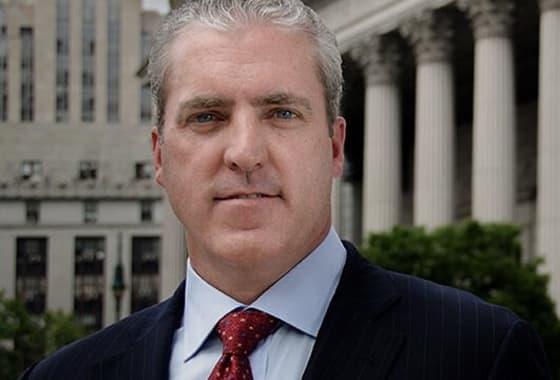
As the founding partner of Williams Law Firm, Joseph P. Williams has dedicated over 30 years to representing mesothelioma victims and their families. His firm has recovered hundreds of millions of dollars for those affected by asbestos exposure, offering personalized, aggressive legal advocacy. Based in New York, Williams Law Firm provides free consultations and handles cases nationwide.
